How AI Try-On Tools Reduce Buyer Hesitation and Increase Confidence
Online fashion shopping has one persistent problem: buyers can’t see how the product will actually look on them.
No matter how good the fabric or design is, uncertainty kills conversions.
Will it fit? Will it look flattering? Will it match expectations?
This is where AI try-on tools are quietly transforming fashion eCommerce—and helping brands convert hesitant visitors into confident buyers.
In this article, we’ll break down the psychology behind buyer hesitation, how visual validation builds trust, and how tools like eFashionAI help brands create high-quality fashion images without photoshoots.
Why Buyer Hesitation Is So High in Online Fashion
Fashion is deeply personal.
When customers shop online, they’re making decisions without physical interaction.
Common doubts include:
- “How will this look on a real person?”
- “Is the model’s body type similar to mine?”
- “Is the color accurate?”
- “Will this fit my style?”
Even with size charts and descriptions, static product images often fail to answer these questions.
As a result:
- Shoppers hesitate
- Carts get abandoned
- Returns increase
This isn’t a marketing problem.
It’s a visual confidence problem.
The Psychology of Visual Validation in Fashion
Humans trust what they can see.
In physical stores, buyers rely on:
- Trial rooms
- Mirrors
- Real-world movement and fit
Online, visuals must do all the heavy lifting.
When customers see a garment worn by a realistic model that feels relatable, their brain subconsciously asks fewer questions.
This reduces friction and builds trust.
AI try-on technology bridges this gap by offering contextual, realistic fashion visuals—without the cost or delay of traditional photoshoots.
What Are AI Try-On Tools?
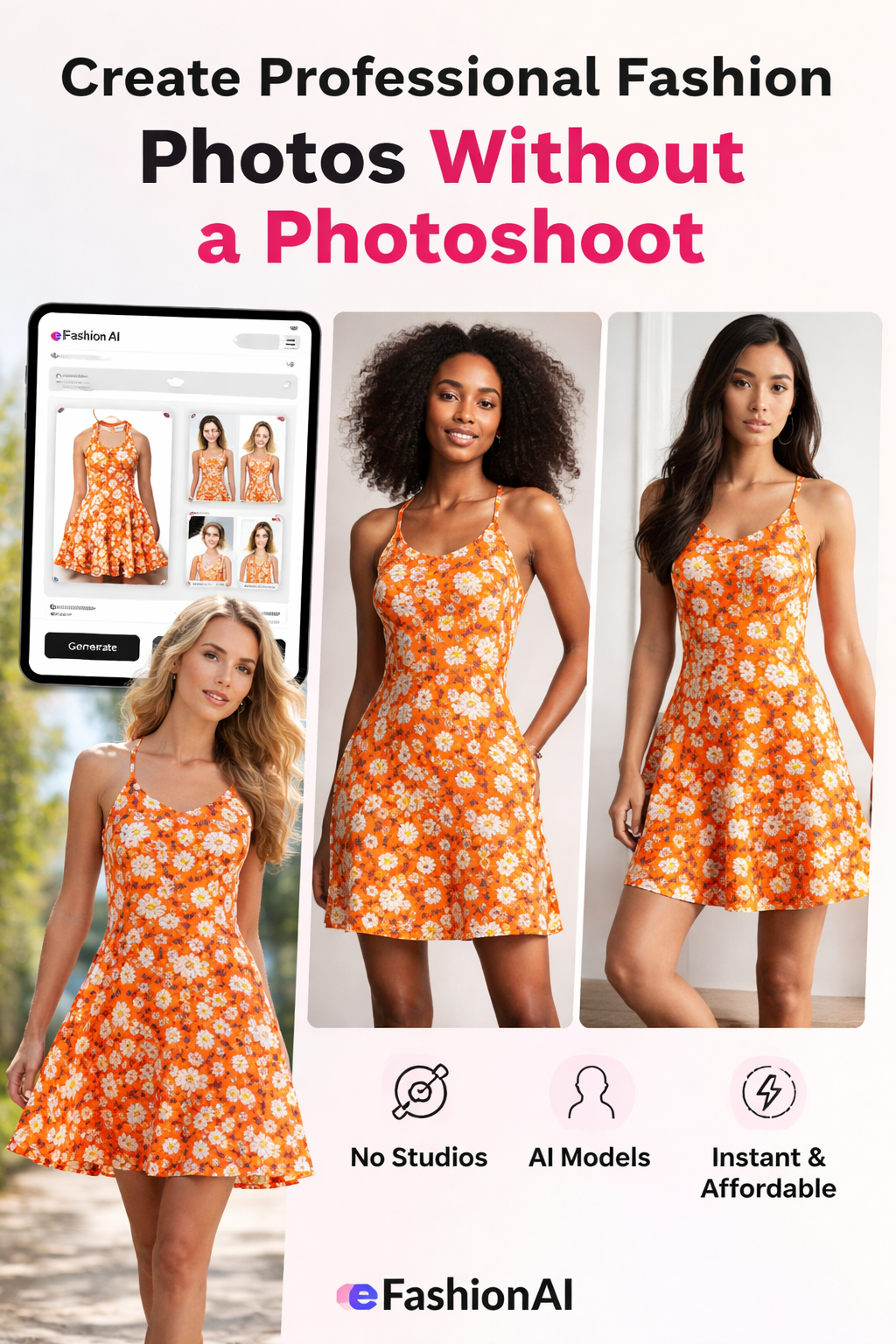
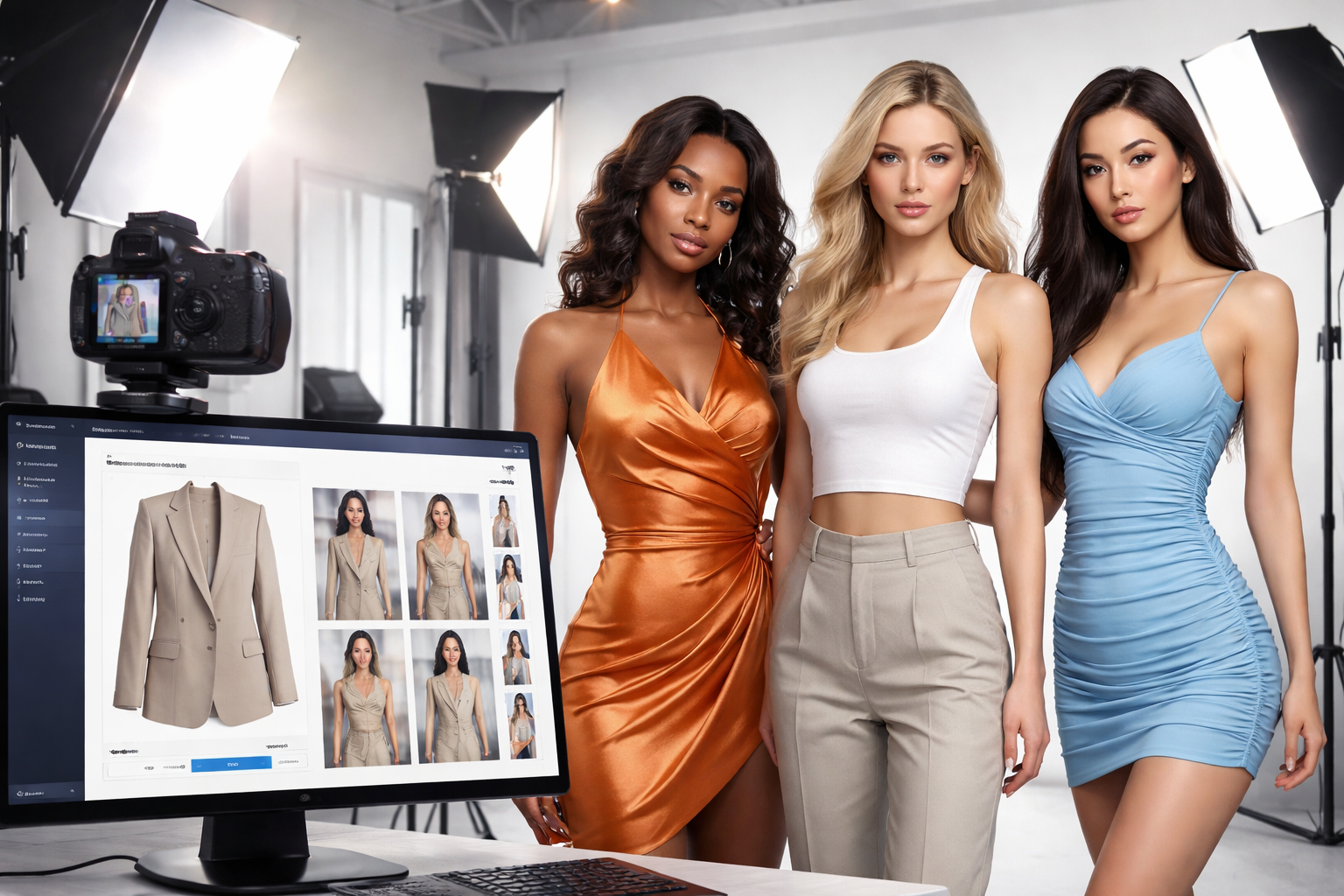
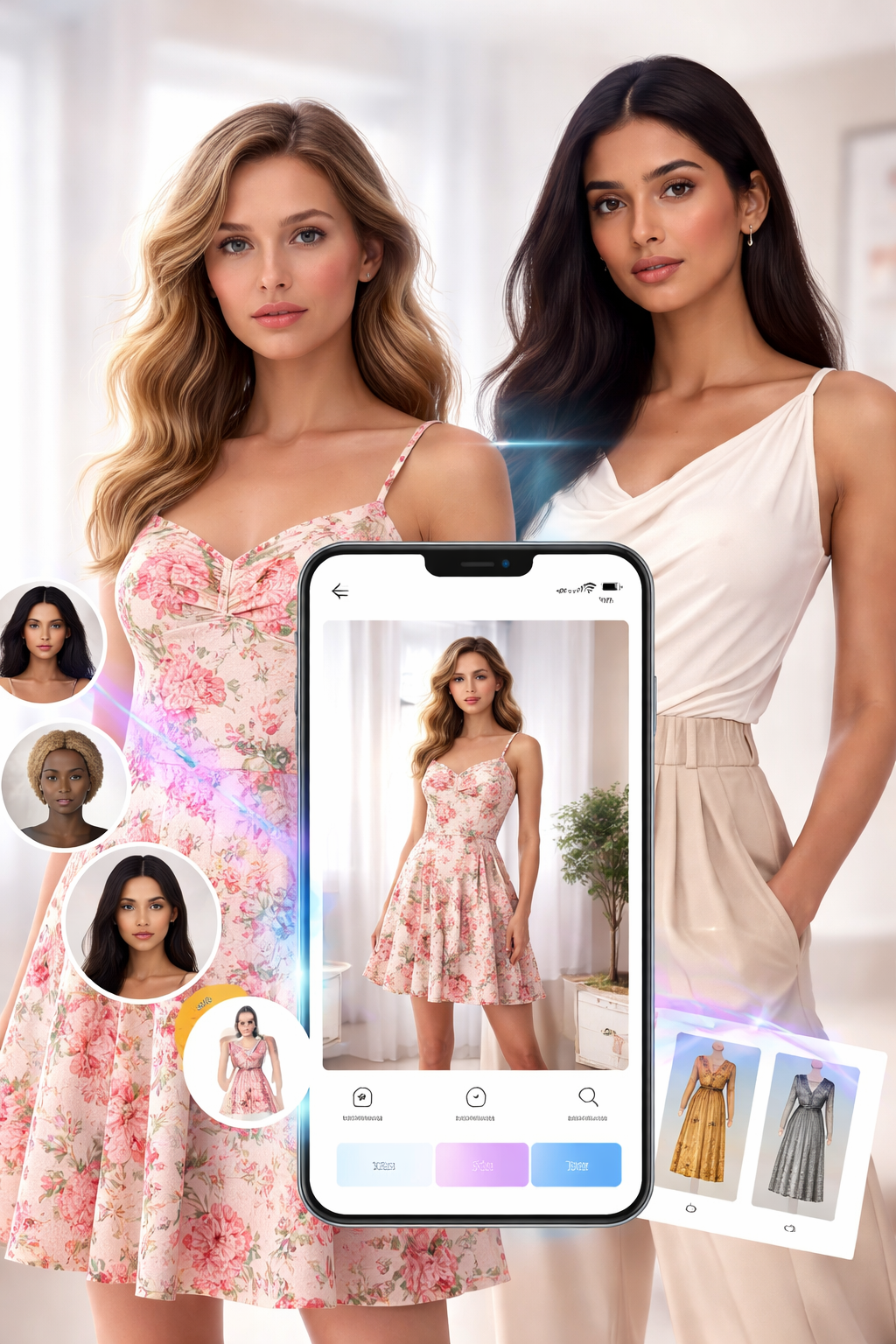
AI try-on tools use artificial intelligence to place garments on virtual fashion models.
Instead of photographing clothing on human models, brands can:
- Upload a garment image
- Select or generate AI models
- Instantly create production-ready fashion photos
This allows sellers to showcase apparel in a way that feels real, consistent, and scalable.
How AI Try-On Tools Reduce Buyer Hesitation
1. Shoppers See the Product in Context
Flat lays and mannequins don’t tell the full story.
AI-generated fashion images show:
- How the garment drapes
- How it fits on a body
- How it looks styled
This helps customers visualize themselves wearing the product—one of the strongest drivers of purchase confidence.
2. Consistent Visual Quality Builds Brand Trust
Inconsistent photos signal risk.
AI fashion photography ensures:
- Uniform lighting
- Clean backgrounds
- Professional presentation across all products
When every product looks polished, shoppers perceive the brand as more reliable and premium.
3. Faster Product Launches Mean Less Guesswork
Many brands delay launches due to photoshoot logistics.
With AI product images:
- New collections go live faster
- Seasonal trends are captured instantly
- Brands test visuals without committing to expensive shoots
This speed reduces uncertainty on both sides—brands and buyers.
4. Fewer Returns Due to Better Expectations
Returns often happen when reality doesn’t match perception.
AI try-on visuals create more accurate expectations, reducing:
- “It looked different online” complaints
- Size and fit surprises
- Visual mismatch frustration
Better visuals lead to better-aligned purchases.
Real-World Scenario: D2C Fashion Brand Without a Photoshoot Budget
Imagine a small D2C brand launching a new ethnic wear collection.
Traditional route:
- Hire models
- Rent studio space
- Coordinate styling and photographers
- Wait days or weeks for final images
With eFashionAI:
- Upload garment photos
- Generate AI fashion models instantly
- Publish high-quality images the same day
The brand launches faster, saves costs, and customers see realistic visuals—boosting confidence and conversions.
How eFashionAI Makes AI Try-On Practical for Brands
eFashionAI is designed specifically for fashion businesses, not tech teams.
With eFashionAI, you can:
- Create fashion photos without photoshoots
- Generate AI models in under 30 seconds
- Produce consistent, production-ready images
- Scale visuals across catalogs effortlessly
No studios.
No human models.
No waiting.
Just clean, professional AI fashion photography that helps buyers trust what they see.
Why AI Try-On Is Becoming a Competitive Advantage
As online fashion becomes more crowded, visuals are no longer optional.
Brands using AI try-on tools:
- Communicate value faster
- Reduce buyer hesitation
- Build confidence at first glance
Those still relying only on flat images risk losing attention—and trust.
Frequently Asked Questions (FAQ)
What is an AI try-on tool in fashion?
An AI try-on tool digitally places garments on virtual models, allowing customers to see how clothing looks when worn without physical photoshoots.
Can AI-generated fashion images replace photoshoots?
For most eCommerce use cases, yes. AI product images are ideal for catalogs, listings, ads, and social content without the cost and time of traditional shoots.
Does AI fashion photography look realistic?
Modern AI models are highly realistic, showing accurate draping, proportions, and styling when generated with quality garment images.
Is AI try-on useful for small fashion brands?
Absolutely. It helps small and D2C brands launch faster, reduce costs, and compete visually with larger players.
How long does it take to generate images with eFashionAI?
Most images are generated in under 30 seconds, making it easy to scale product visuals quickly.
Final Thoughts: Confidence Sells Fashion
Buyers don’t hesitate because they don’t like your product.
They hesitate because they can’t visualize it clearly.
AI try-on tools solve this by replacing doubt with clarity and imagination with proof.
If you want to reduce hesitation, increase trust, and create fashion photos without photoshoots, AI-powered fashion photography is no longer optional—it’s essential.
Ready to see how AI can transform your fashion visuals?
Explore eFashionAI and experience faster, smarter, confidence-driven fashion photography.